TropesStepsiblings
Trope · 18+

Stepsiblings: when your parents' wedding changes everything

One word at the registry office, and the person in the next room is suddenly off limits.

Stepsibling romance follows two adults who become family through their parents' marriage without being related, and who fail or hold at exactly that line. Readers love the taboo without blood: everything argues against it except biology. At Everglow you decide whether the hallway between you stays a border.
Next DoorSample fromNext DoorYou play Amelie, 23 · Forbidden Family · New Adult
What it is about

Stepsiblings

Stepsiblings for three months, sharing a flat in Berlin since tonight: glances in the kitchen at four a.m., a rainy Sunday on the sofa. In three days Livia becomes your stepsister officially, and the South Tyrol winery has one room too few. Five years of silence, then an inheritance forces you and your stepbrother into a lake house for two weeks. The mechanics are clear: adults who never experienced each other as family are assigned the role overnight and have to live with an attraction that wasn't wrong until yesterday. The parents celebrate, the relatives congratulate, and two people learn a word they never ordered.

What sets stepsiblings apart from other taboo stories is the ordinariness of the closeness. You share a hallway, a kitchen, family celebrations. Age gap has an imbalance in years; here the two are peers. Forced proximity ends after the weekend; here the closeness is permanent. The stakes are the family itself: parents who are happy and two children who don't want to wreck that happiness. Good stepsibling romance stays grown-up. It isn't about transgression for its own sake but about two people rejecting a label nobody asked them about. It matters what the trope isn't, too: it's not about childhood but about two adults whose parents married and who have to live with the result.

At Everglow you can bear the label for a whole season or say one word too many in the hallway on the first night; the story responds to both, and the character remembers who took the countdown seriously. In “Three Days to Family” you play Raffael, in “Next Door” Amelie, in “Two Weeks at the Lake” Finja, each with a different angle on the same question. Intensity is yours to set, and because every character is an adult and everything stays private, nobody is watching. Whether the countdown to the ceremony is an ending or a beginning is settled by your moves.

How it begins

Reading sample: Next Door

Chapter 1 of “Next Door”, the way a reader opens it for the first time. Then it’s her move.

Next DoorChapter 1

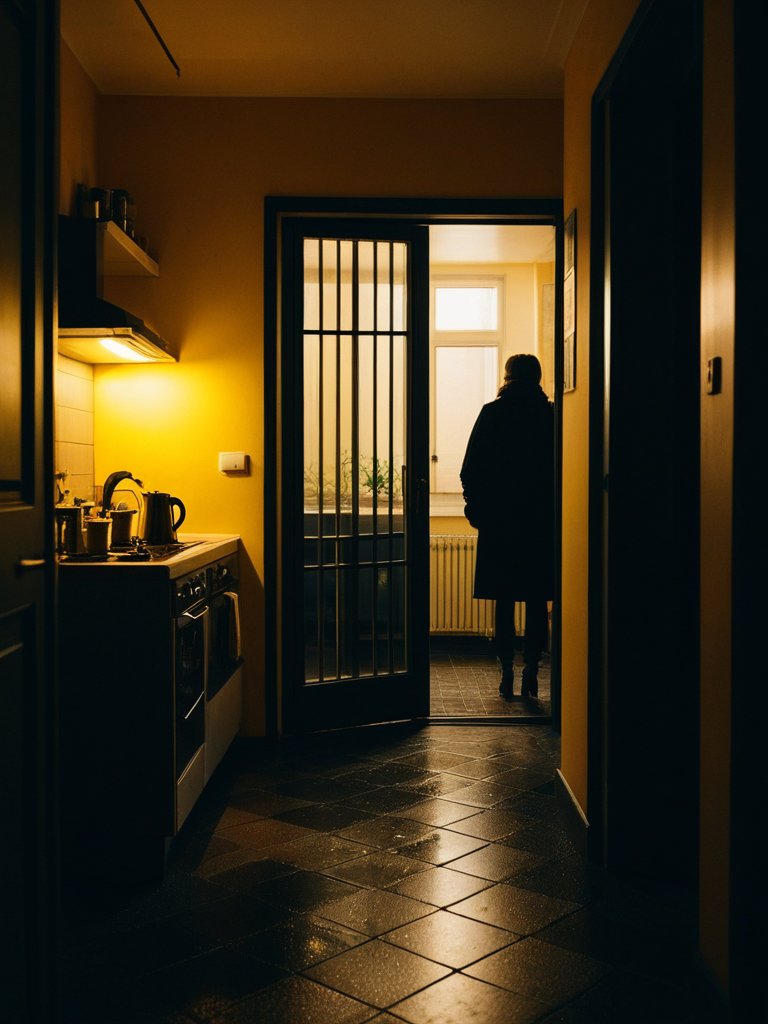
Four in the morning and the kitchen light is on, which means Ben can't sleep either. I am Amelie, twenty-three, an art student with paint on my forearms and a playlist too loud for the neighbours, and three months ago my mother married his father and handed us the same front door in Neukölln.

He is at the counter in a T-shirt and the grey trousers he sleeps in, eating cereal out of the box. Twenty-six, quiet, a man who folds his towels. My opposite in every way that used to annoy me.

“Couldn't sleep?” he says.

“Couldn't stop.” I hold up my hands, blue to the wrist. He looks at them a beat too long, then gets a second bowl down without asking and pushes the box toward me.

The flat has three rooms and a hallway we both pretend is wider than it is. Tonight I have to pass him to reach the sink, and I do, and his back is warm through the cotton when my shoulder brushes it, and neither of us says excuse me. We stopped saying it a few weeks ago. I noticed. I don't think he knows I noticed.

I wash the paint off. He watches me do it, leaning on the counter, and the tap is the only sound. When I turn around, he is closer than he was, or I am, and there is a smear of cobalt I've missed on my jaw and he reaches out with his thumb to wipe it, and stops, hand in the air, as if he's just remembered which family dinner we're both invited to on Sunday.

“Sorry,” he says.

He doesn't move his hand. I don't move my face. The cereal box is between us on the counter and the whole flat is asleep except this room, and one of us is going to have to decide what four in the morning is for.


And now it's your turn.
Stories for this

Stepsiblings

Every story begins with a role that is already set and a world that waits for you. Everything else is your call.

See all stories › · Or build your own world: your characters, your place, your rules. Start your own world ›

Honestly

Who this is for. And who it isn’t.

This is yours if you

  • You like a taboo without actual kinship.
  • Everyday closeness in a shared home appeals more than exotic settings.
  • You enjoy characters who refuse a role assigned to them.
  • You want to decide when the hallway stops being a border.

Skip it if you

  • Family constellations aren't for you; forced proximity offers similar closeness without the label.
  • You want danger rather than taboo; mafia romance and morally grey.
  • You want an obstacle the whole world understands; forbidden love with a vow or a marriage.

You set the heat yourself, from implied to explicit, and can change it in any story. What you don’t want doesn’t happen: your character keeps her boundaries.

Genres for this

If you like this

Terms for this

Words you will meet here

Common questions

In short

What is stepsibling romance?

A love story between two people whose parents have married each other. They share no blood but are socially regarded as siblings, and that's where the taboo comes from.

Are the characters in these stories adults?

Yes, without exception. The youngest lead is twenty-three and an art student; the others are twenty-seven to twenty-nine, with careers and flats of their own. Every story is for adults eighteen and over.

Why is the trope so popular?

Because it moves the prohibition out of the body and into the family. The attraction itself is unproblematic; the consequences aren't. That creates tension without danger and without anyone having to be a villain.

How is stepsiblings different from step-parent stories?

Age and role. Stepsiblings are peers standing side by side; a stepfather or stepmother adds an age difference and a position of authority, as in “Summer House by the Baltic Sea” or “The Last House”.

Your first night

One room too few, three days until the vows.

In “Three Days to Family” you're Raffael, best man at a winery in South Tyrol, and Livia has just been handed the key to the same room. The first night starts now.

Begin “Next Door”All stories

Adults 18+ only · private and discreet · 100 Sparks to start