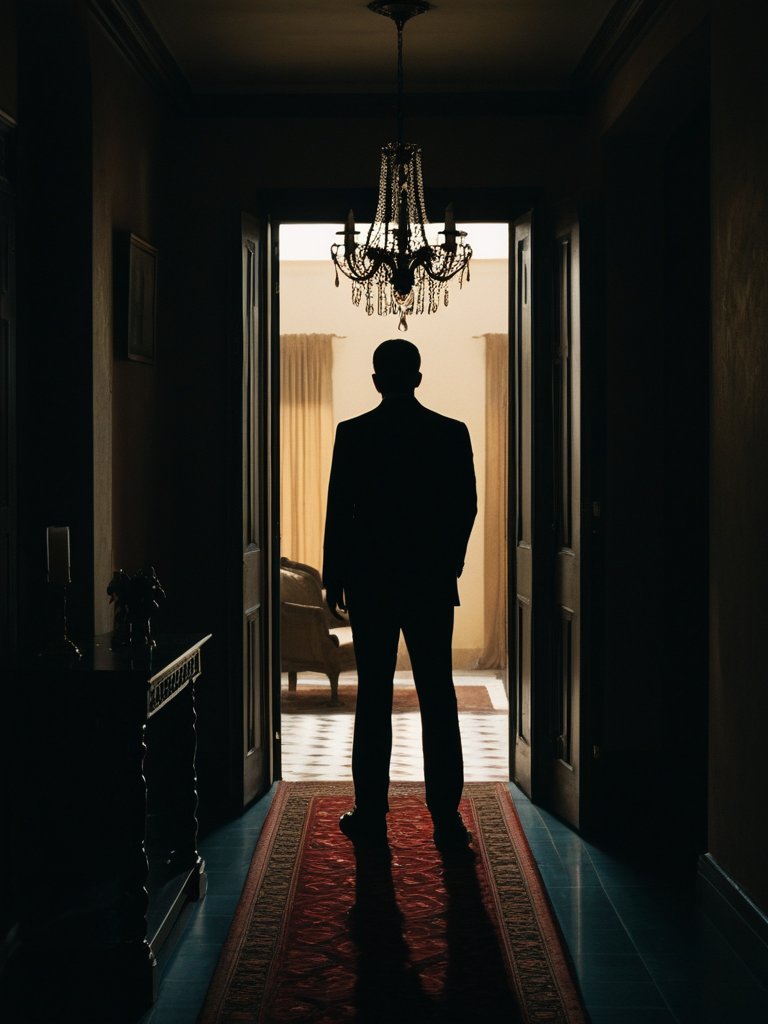
The key still turns the way it did when I was nineteen and leaving. I stand in the hall of my father's villa in Bad Homburg with a suitcase I haven't set down, and the house smells of cold ash and lilies from a funeral I attended from the back row. My name is Julian. I am twenty-seven, and I swore I would never sleep under this roof again.
Vivien is in the library. Of course she is. She has a box of my father's papers open on the desk and a pencil behind her ear, and when she looks up she doesn't pretend surprise.
“You came,” she says. Not a question, not a welcome. She is thirty-eight, eleven years older than me, and I spent most of my twenties calling her the woman who broke my family. In my head, she was louder than this.
“I came for what's mine.”
“Then you’ll need to read.” She pushes the box an inch toward me. “Your father left a great deal unsaid. Most of it is in here.”
I want to tell her I don't take instructions from her. Instead I notice the grey at her temple she hasn't dyed, the ink on her index finger, the way she keeps her chair between us like a rule. The room is too warm. Someone has lit the stove, and I realise she did it for me, before she knew whether I would come.
She stands, and we are suddenly closer than we have been in eight years. “I hated you too, for a while,” she says. “It didn’t help either of us.” Then she leaves the pencil on the desk and the door open, and the box sits there, waiting for me to decide what kind of son I am.