TropesRockstar Romance
Trope · 18+

Rockstar Romance: when fame is a cage and you write the key

Everyone hears his voice. Only you know whose words they are.

Rockstar romance follows someone the world listens to and the one person he doesn't have to perform for. Readers love the contrast between stage and back room: the light he lives in and the quiet where he's honest for the first time. At Everglow you sit in the studio at night and decide which line he sings.
GhostwriterSample fromGhostwriterYou play Romy, 31 · Romance · Drama
What it is about

Rockstar Romance

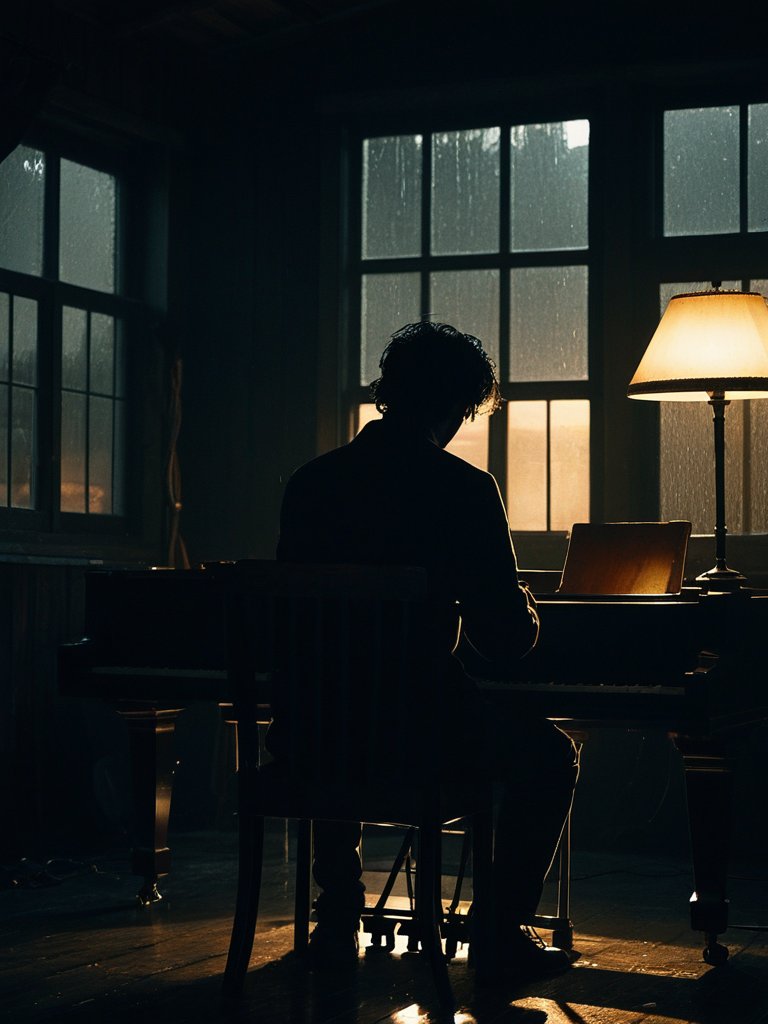
You're Romy, thirty-one, a songwriter who works unseen, and the commission is to write the comeback album for Nick Rivers. The nights in his remote country studio produce songs, and with them something the contract didn't cover. The sessions are confidential, the glances unspoken, and at some point he's only singing about you. The trope lives on the gap between the image the world holds and the man hanging on a single line at three in the morning, asking you whether it's true. The line between craft and wanting blurs the moment a lyric is no longer written for the audience but for the man singing it.

Boss romance has power in hierarchy; rockstar has it in visibility. He can't promote you, but he can make you seen or keep you hidden. Secret identity has someone lying; here nobody does, and the romance stays secret because fame tolerates no supporting cast, not because anyone wears a mask. The trope's core is art as approach. You don't grow closer through conversation but through lines and melodies, through the one word he sings differently from how you wrote it, which tells you what he actually means. A song is a confession with a melody, and in the studio only one person is listening. The stage amplifies everything except the truth, and the studio does the reverse.

At Everglow you decide whether to leave the line or change it, whether to stay when the session officially ends at midnight or go. Nick remembers what you wrote and what you took back, and the songs change with what has passed between you. Whether the romance stays suggestive or turns explicit is your intensity setting; and because everything is private, the country studio is the only place it exists. Fame stays a cage, but you're holding the pen, and the cage has lyrics.

How it begins

Reading sample: Ghostwriter

Chapter 1 of “Ghostwriter”, the way a reader opens it for the first time. Then it’s her move.

GhostwriterChapter 1

The studio is in a converted barn at the end of a lane with no sign, and the manager's instructions said to come after dark and park behind the trees. I am Romy, thirty-one, and I have written eleven songs that other people sing on the radio. None of them carry my name. That is the deal, and I have always liked the deal.

Nick Rivers opens the door himself. No entourage, no shoes, a guitar he's clearly been holding for hours. He is older than his posters and better than his photographs, and he looks at me the way you look at someone who has arrived to fix something you broke.

“You're the ghost,” he says.

“I'm the writer.”

“Same thing, out here.” He steps back to let me in. The barn is all cables and candles and one enormous window on the dark fields. There is a notebook on the floor with most of the pages torn out.

He plays me what he has. It's half a chorus, repeated, and it's not good, and he knows it, and he watches my face while I listen because he wants me to say so. I don't. I ask what he was thinking about when he wrote it. He goes very still. “A phone call,” he says. “Two years ago. I didn't pick up.” Then he puts the guitar down and says, “Nobody knows you're here. Nobody can know. If this album fails, it fails as mine.”

I pick up his guitar. It's tuned a half-step down, the way I like it, and I don't ask how he knew. I play the chorus back to him with one chord changed, and his head comes up like a dog hearing its name, and he says, “Again,” and moves to sit closer on the floor than the barn requires. It is almost midnight. We have thirty days and one rule, and I can already feel where the rule is going to bend.

And now it's your turn.
Honestly

Who this is for. And who it isn’t.

This is yours if you

  • You love stories about art that gets too personal.
  • The man behind the image interests you more than the image.
  • Studio nights appeal more than stage nights.
  • You want to decide which line he sings.

Skip it if you

  • Fame and press in the background tire you; small-town romance or slow burn.
  • You want a lead with visible power rather than one in the background; boss romance.
  • You want danger instead of glamour; bodyguard or mafia romance.

You set the heat yourself, from implied to explicit, and can change it in any story. What you don’t want doesn’t happen: your character keeps her boundaries.

Genres for this

If you like this

Terms for this

Words you will meet here

Common questions

In short

What is rockstar romance?

A love story featuring a musician in the spotlight and someone who gets to know him offstage. The trope plays with closeness and publicity: what the world sees is never what's happening between the two of them.

Why does the rockstar work as a love interest?

Because he's two people, one for everyone and one for nobody. The story promises access to the second, and that rare privilege feels like trust.

Does Everglow have a rockstar story?

Yes: “Ghostwriter”. You write the comeback album for Nick Rivers, and in the country studio at night more than music gets made. The catalog is growing, and your own world can have any stage you like.

Your first night

The first session starts at ten. He's still singing someone else's words.

In “Ghostwriter” you sit across from Nick Rivers in the country studio for the first time, and the line you hand him decides what the album is about.

Begin “Ghostwriter”All stories

Adults 18+ only · private and discreet · 100 Sparks to start